
Famous Washington Arrest Records
Washington cases become famous for different reasons. A public trial can do it. So can an appeal that reshapes a sentence, or a case that climbs into federal court. The mugshot is rarely the best record. A law-enforcement chronology, a court opinion, a charging release, or a docket entry answers what actually happened. Each source answers a different question.
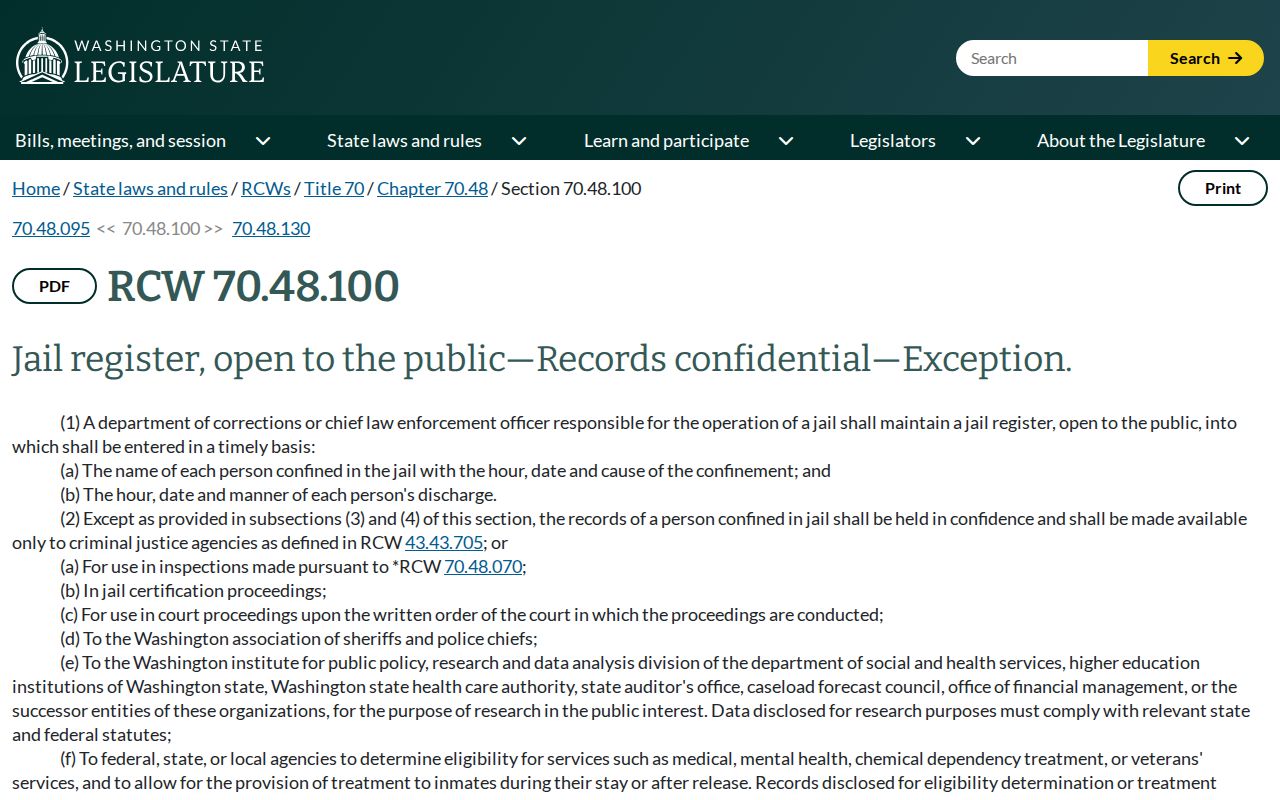
Washington's jail-register law draws a sharp line here. It opens specified register information but keeps other confined-person records confidential except for stated uses. In Cowles Publishing Co. v. Spokane Police Department, the state Supreme Court held that booking photos were not generally disclosed under that rule. A released person's photo does not become public just because custody ended.
The official RCW 70.48.100 jail-register text sets out the public register rule. That is why a photo alone falls short.
Without a confirmed photo source, the court record stays reliable.
Notable Washington Cases
Each row names a case milestone. It names the custodian too. "Record lives" here means the original court or agency path, not a public booking photo.
| Case | Key year | Record source | Where the original record lives |
|---|---|---|---|
| Gary Leon Ridgway | 2001 arrest; 2003 pleas | King County Sheriff chronology | King County Superior Court and the official investigation chronology |
| Robert Lee Yates Jr. | 2000 plea; later Pierce County judgment | Washington Supreme Court opinion | Spokane and Pierce County Superior Court files and appellate opinions |
| Colton Harris-Moore | 2011 federal pleas | U.S. Attorney announcement | Federal case CR10-336-RAJ and Island County Superior Court |
| Mary Kay Letourneau | 1997 plea; later appeal | Washington Court of Appeals opinion | King County Superior Court and the appellate opinion |
| Manuel Ellis prosecution | 2023 acquittals | Washington Courts media clip | Pierce County Superior Court, with charging and verdict records from the state |
| Jeffrey Nelson | 2024 verdict; 2025 sentence | King County Prosecuting Attorney case memo | King County Superior Court case 20-1-06432-3 and KC Script Portal |
Read the disposition, not just the arrest. Courts sometimes dismiss charges outright. That outcome belongs beside any account of the case.
Green River Court Records
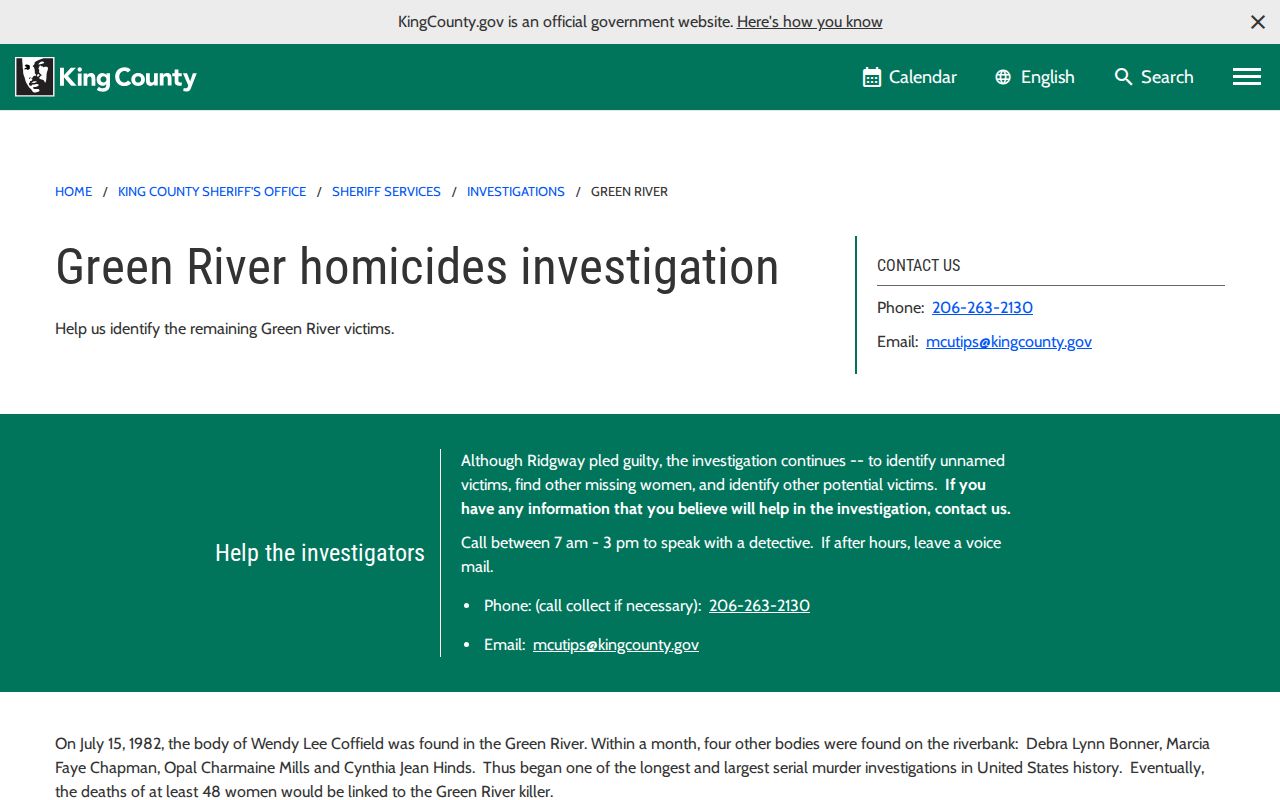
Gary Leon Ridgway's arrest came in November 2001. The King County Sheriff's Green River chronology records it. On November 5, 2003, he pleaded guilty to 48 counts of aggravated murder in the first degree. Prosecutors agreed to skip the death penalty in exchange for his complete account of the King County murders. The plea and the sentence are court outcomes.
King County Superior Court holds the original legal file. The Sheriff's chronology page serves as the official public source for the timeline. It supplies no current booking photograph. Under Washington's Cowles rule, a general request for an old jail photo is no guarantee of getting one.
The official King County Sheriff chronology shows how a case history documents both the event and the plea without acting as a mugshot feed. That is the point. Old cases rarely work any other way.
Other Washington cases follow the same sequence. Find the agency record, then confirm the plea or verdict in the court file. A news image identifies the story, never the outcome.
Washington Court Outcomes: Yates and Letourneau
Robert Lee Yates Jr. pleaded guilty in 2000. The venue was Spokane County Superior Court. In In re Personal Restraint of Yates, the Washington Supreme Court describes thirteen counts of aggravated first-degree murder plus one count of attempted first-degree murder. The deal brought a 408-year sentence. Pierce County Superior Court later convicted him of two more aggravated first-degree murders and sentenced him to death. Appellate proceedings affirmed that judgment. The two county files and the appellate opinions track each outcome separately. County lines count here.
The opinion links the prosecutions without merging them into one arrest record. That separation matters. It offers no general public booking photo. Treat each prosecution as its own record. A photo from news coverage should carry a named source and stay separate from the legal file. For any charge or disposition, the case file from the entering court is the lookup path.
Mary Kay Letourneau pleaded guilty on August 7, 1997. The Court of Appeals opinion in State v. Letourneau records two counts of second-degree rape of a child in King County. The trial court imposed an 89-month standard-range sentence. Part was suspended under the special sex offender sentencing alternative, with conditions attached. A no-contact violation revoked the suspended term, and she served the confinement through DOC. On appeal, the court struck certain supervision and financial-gain conditions but left the convictions and sentence history as described.
The King County Superior Court file and the appellate opinion form the record path. For photos, an identified news archive is the reliable source. The CBS/AP photo chronology is one such collection, not an official jail-register field. The ruling trimmed sentence conditions only. Her guilty pleas stood.
Note: An appeal can change part of a sentence while the conviction stands, so check the opinion's holding before summarizing the result.
Harris-Moore Washington Case Records
Colton Harris-Moore's run ended in the Bahamas. The Western District of Washington U.S. Attorney's announcement records his guilty pleas to seven federal charges on June 17, 2011, after a multistate crime spree. His federal case number was CR10-336-RAJ. Island County also had its own prosecution track. Sentencing, restitution, and supervision all followed later. Federal sentencing records and the Island County Superior Court file remain the original legal sources. The famous arrest photograph came from Bahamian authorities and news coverage. No Washington county booking feed carried it. A photo and a court record answer different questions. One headline cannot carry a full disposition. Match the jurisdiction before searching: federal charges sit in federal court records, and the Island County case sits with that county's court.
Ellis and Nelson Washington Verdicts
Manuel Ellis died in Tacoma in 2020. The Attorney General's office announced charges against three officers in the case. A Washington Courts media clip records the verdicts. A Pierce County Superior Court jury found all three not guilty in December 2023. The acquittals are the disposition. The Attorney General and participating agencies keep the charging materials and investigation files. The memo names no public booking-photo location. Any charge photo would need its own source, date, and provenance. State the charge and the outcome side by side.
Jeffrey Nelson's case ended in conviction. King County charged him in August 2020 with second-degree murder and first-degree assault in Jesse Sarey's death. The Prosecuting Attorney's memo lists Superior Court case 20-1-06432-3. It records guilty verdicts in June 2024. Sentencing came on January 23, 2025. The judge imposed 200 months for murder and 123 months for assault, run concurrently, for 200 months in custody plus 36 months of community custody. Sentencing documents sit in the KC Script Portal under that case number. That number unlocks the record.
Note: The Ellis officers were acquitted, so any charge or arrest image must carry the December 2023 verdict beside it.
Trace a Washington Case Record
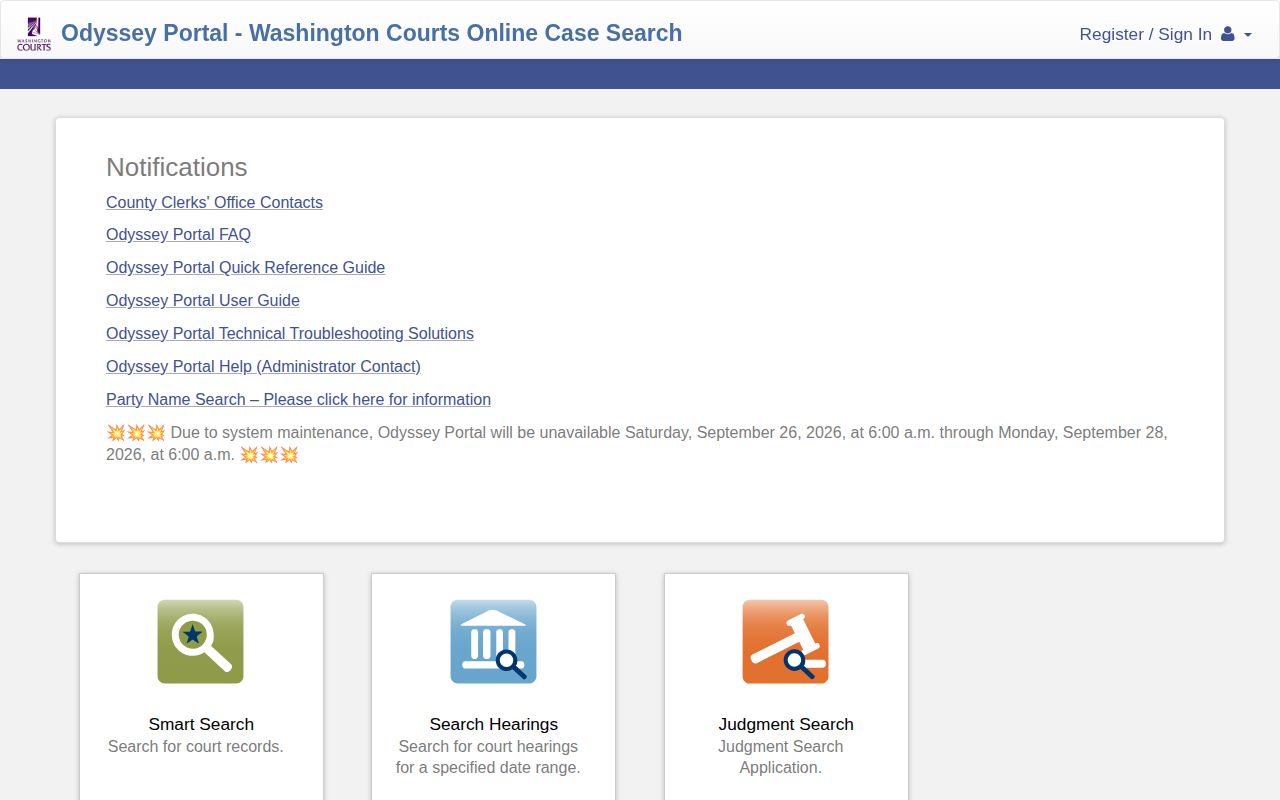
Pick the record path that fits your question. Washington's statewide name and case search is a reference index, updated daily. It is not the official record. Odyssey covers participating superior courts, and some courts run separate access systems. Sealed cases and juvenile files may not appear.
- Start with the county, agency, and approximate event date. The arresting agency and court of record may be in different jurisdictions.
- Search the statewide index by name or case number, then note the court listed. Treat the result as a pointer, not the final record.
- For a participating superior court, use the Odyssey Portal. For a court with a separate access system, follow that court’s official page or ask its clerk how to retrieve the case file.
- Confirm the disposition in the court file or with the clerk. Use the agency’s records office for an arrest report or booking record, and ask separately whether a photograph is disclosable.
This is the official Odyssey Portal landing page. It shows where case lookup begins, not the facts of any named person's case.
The statewide guide to Washington arrest and booking records maps the broader official search path. Older prison photos live in archives. The historical mugshot records page separates the two.
Historical Washington Photo Archives
Older Washington correctional photos survive in archives. The State Archives' penitentiary commitment registers and mug shots cover 1887 to 1946. Indexed register material comes with digitized images for many numbered entries. The Reformatory admissions registers cover 1908 to 1923. Those records flag which entries include photographs. These are prison archives, not county-jail booking feeds or current custody results.
Retention rules matter too. The law-enforcement retention schedule includes a category for notorious or historically significant inmate custody files, from booking to release and court material. That series is kept six years after incarceration ends. It then moves permanently to State Archives when the category applies. An ordinary booking photo does not become archival on its own. A famous case alone is not a retention category. The Digital Archives collection description identifies the historical register and photograph series rather than a current-arrest list.
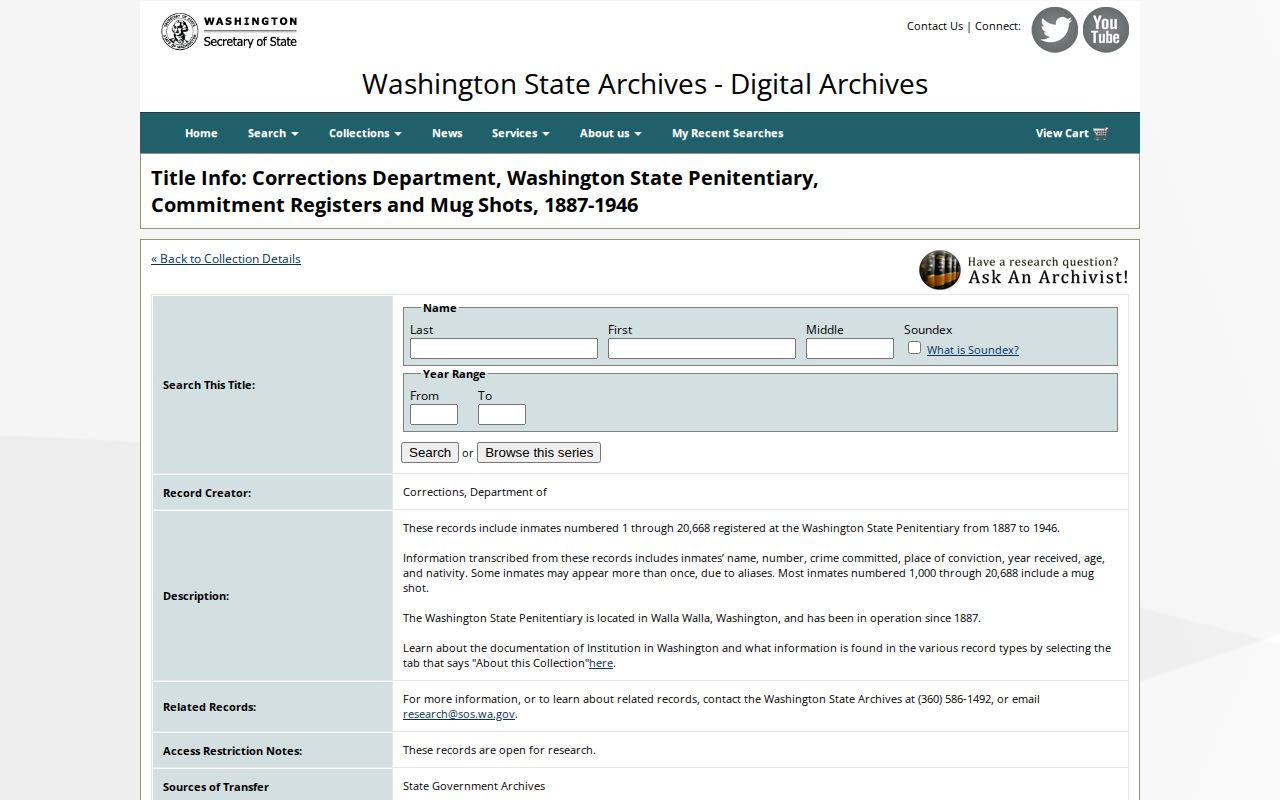
Archives lists a research contact for undigitized records. A request process exists too. Give the collection title, person, record number, and date range, and ask for an estimate before ordering extra staff research or copies. An archival portrait should never be labeled a current arrest photo.