
Where Washington Busted Mugshots Reside
State Archives keeps what agencies send after retention schedules run their course. It is not a statewide mugshot index. A prison register entry might carry a portrait. A county booking photo may still sit with the original agency, may have been destroyed, or may live in another record series. What transfers to Archives depends on record class and archival appraisal. Age alone does not decide it. Start where the record was born. State penitentiary and reformatory admission registers are the clearest digitized photo collections. An older county arrest may instead need the sheriff's records custodian or the handling court. The Washington County Directory routes you to local systems. The statewide arrest and roster overview shows where current booking data is published. Neither path promises a decades-old image still exists. Keep each record's purpose straight. An archival photo documents a prison admission, not present custody or a case's outcome. Registers, case files, release papers, and photographs can sit in separate offices.
Digitized Washington Mugshot Collections
Digital Archives holds several corrections collections useful for old Washington mugshots and prison records. Their scope varies. Some are register series with indexed names and photos; others hold institutional images or pardon files that may contain a portrait. Read the collection description first. Not every image is a booking portrait.
| Collection | Where and era | What it includes | How to access |
|---|---|---|---|
| Washington State Penitentiary commitment registers and mug shots | State Archives; 1887–1946 | Indexed entries numbered 1 through 20,668; most entries numbered 1,000 through 20,668 include a mug-shot image. | Search the collection by name or year range. |
| Washington State Reformatory admissions registers | State Archives; 1908–1923 | Admission records that include photographs. | Search the collection record and request help if the item is not digitized. |
| McNeil Island Correctional Center | State Archives; 1855–2010 | A broader visual and institutional collection; not every image is a booking portrait. | Use the collection description to narrow the image type. |
| Governor's pardon files | State Archives; 1889–1917 | May include prison records, photographs, and correspondence. | Search by name and file date, then confirm the item details. |
| Seatco convict record collection | State Archives; historic Seatco records | A correctional record source, but a register should not be called a mugshot collection unless the item has an image. | Review the record description or ask Archives about related material. |
The penitentiary series works best for portrait searches. It holds indexed commitment registers with mug-shot images for many inmates. The records are open. Aliases mean a name can appear twice. Keep the entry number and date handy to avoid mixing up people. The State Archives penitentiary collection page lays out the search fields. It also describes the mug-shot material.
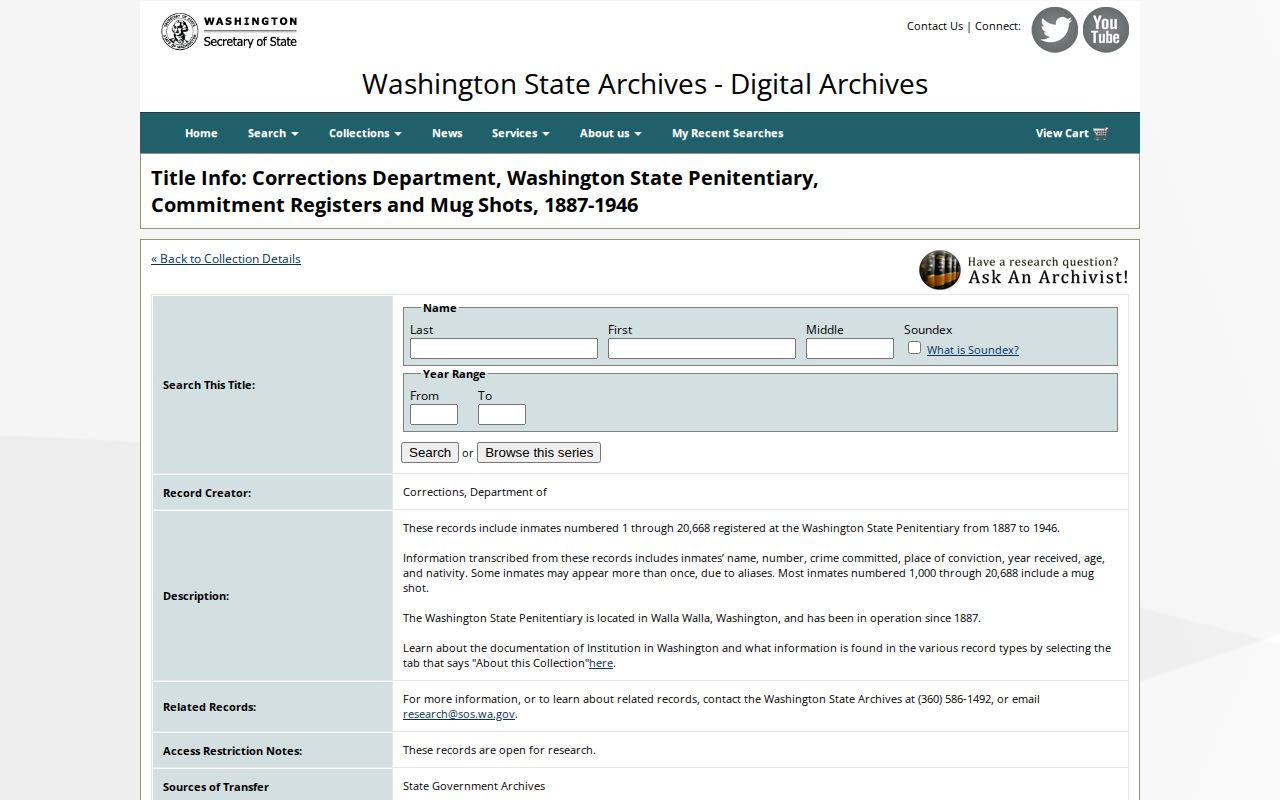
The page shows a collection description and search form. It is not a photo grid or a current jail roster. Other collections demand patience. The McNeil Island series covers inmate life and the institution itself. Pardon files can hold far more than a portrait. The State Archives' legacy genealogy page describes additional inmate files and registers. These reach into the mid-twentieth century. A broad description, though, never proves a particular person has a surviving photo. Note: Collection titles and item descriptions matter, since a historical correctional record does not always include a mugshot.
Retention for Historic Busted Records
The law-enforcement retention schedule includes an archival series, DAN LE2010-086. It covers custody files of people deemed notorious or historically significant. Records in that series can span admission, booking, transfer, background, classification, infraction, release or community-corrections, and court material. Retention runs six years after incarceration ends. Then the file moves to State Archives for permanent keeping. The rule covers records fitting the series, not every county booking photo.
Appraisal hunts for lasting value. Criteria include contemporary notoriety, heavy media attention, new methods or technology, scholarly citation, policy or legal change, community importance, or unusual restitution and institutional impact. That explains why a famous inmate's file survives. An ordinary one does not. Preservation still does not guarantee public access where a separate rule limits it.
Washington State Archives' retention guidance connects agencies to the current schedule and appraisal help.
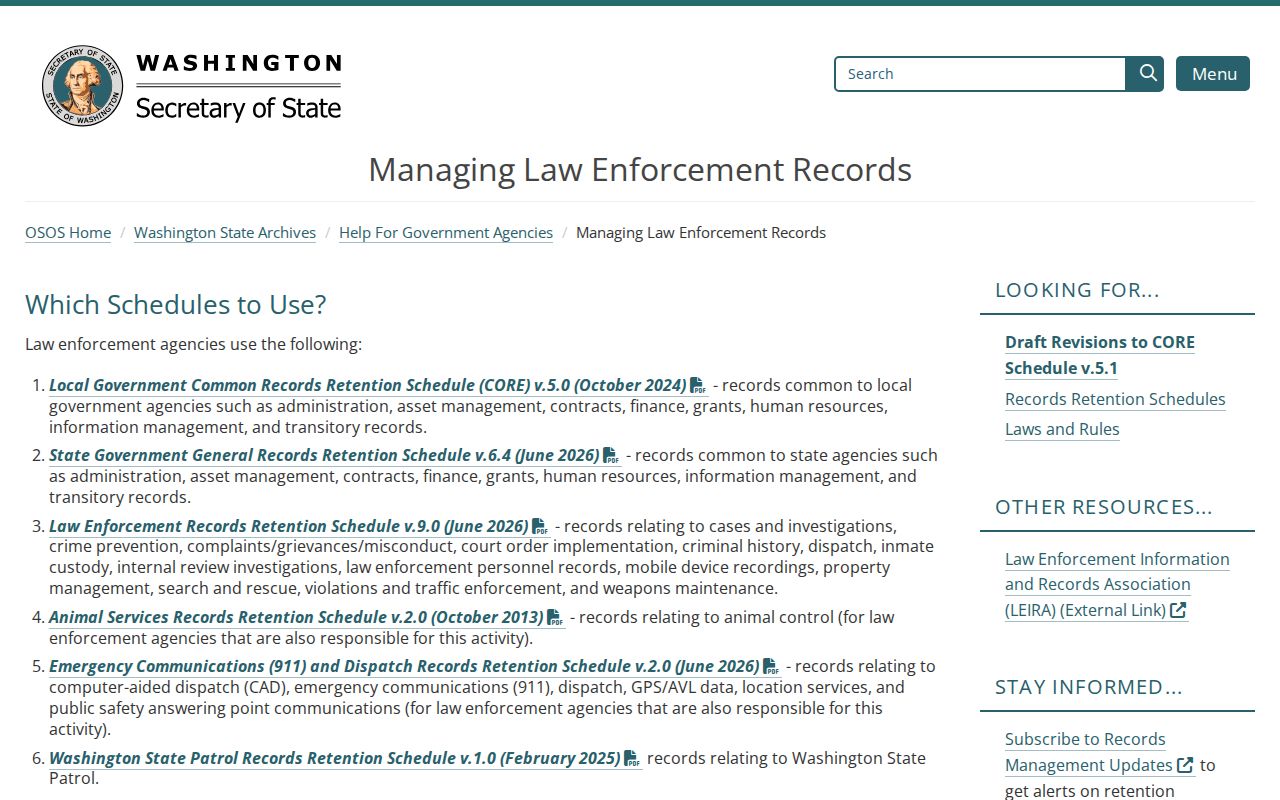
The schedule page guides records custodians. It never promises a specific booking image was kept.
Request Old Mugshots from Archives
The Digital Archives catalog is the logical place to start a Washington records search. Look by name, collection, keyword, or date. Staff there can be reached at that email or by phone at 360-586-1492. When you write, share enough detail that they can tell a penitentiary admission portrait from a county booking photo or some other institutional file.
- Choose the likely collection, then search a name, keyword, or date range in the catalog.
- Record the collection title, item or record number, name as written, and the years covered by the search.
- Check the image and transcription against the entry details. Note aliases or repeat entries instead of assuming every result is the same person.
- If the record is not online, send Archives the identifying details and ask whether it holds the item or can refer you to the agency that does.
- Before ordering a scan or extended staff research, ask for a cost estimate and confirm the reproduction terms.
Start with the Archives reproduction and cost-recovery page. Retrieval and inspection are generally free. The free tier covers a set amount of staff time. Go past those limits and fees can appear. Beyond the included time, extra research, copies, scans, and digital delivery may carry charges that vary by service, so ask for an estimate instead of assuming a set price.
Make the request easy to act on. Separate what you know from what you want. Give a full name, any alternate spelling, the institution, the collection title, and a date range. Those details shrink the search fast. And if a published caption claims an old photo exists, trust the record itself, not the caption.
Note: Archive staff can name their holdings and explain access options, but no search can restore a local file that never reached them.
Washington Busted Mugshots and Current Custody
A jail register and a prison admission file answer very different questions. Under RCW 70.48.100, every jail must keep an open register. It lists the confined person's name. It also covers confinement time, date, and cause, plus discharge time, date, and manner. The statute treats most other records of a confined person as confidential. A booking photo is not among the required public register fields. An old portrait sitting in a State Archives collection may be open under that collection's own access terms. Still, it should not be labeled a current mugshot or tied to a recent arrest.
For current booking information, the local jail or law-enforcement agency holding the person is the usual source. A digitized prison record is something else entirely. It may be a historic entry from a state institution. Retention schedules can mean an agency destroyed a record long ago. Archival transfer only applies when a record fits a retained series. And a record absent from search results may simply not be indexed. Its absence does not prove it was never created. The statute's register language spells out the limited current-custody fields open to the public.
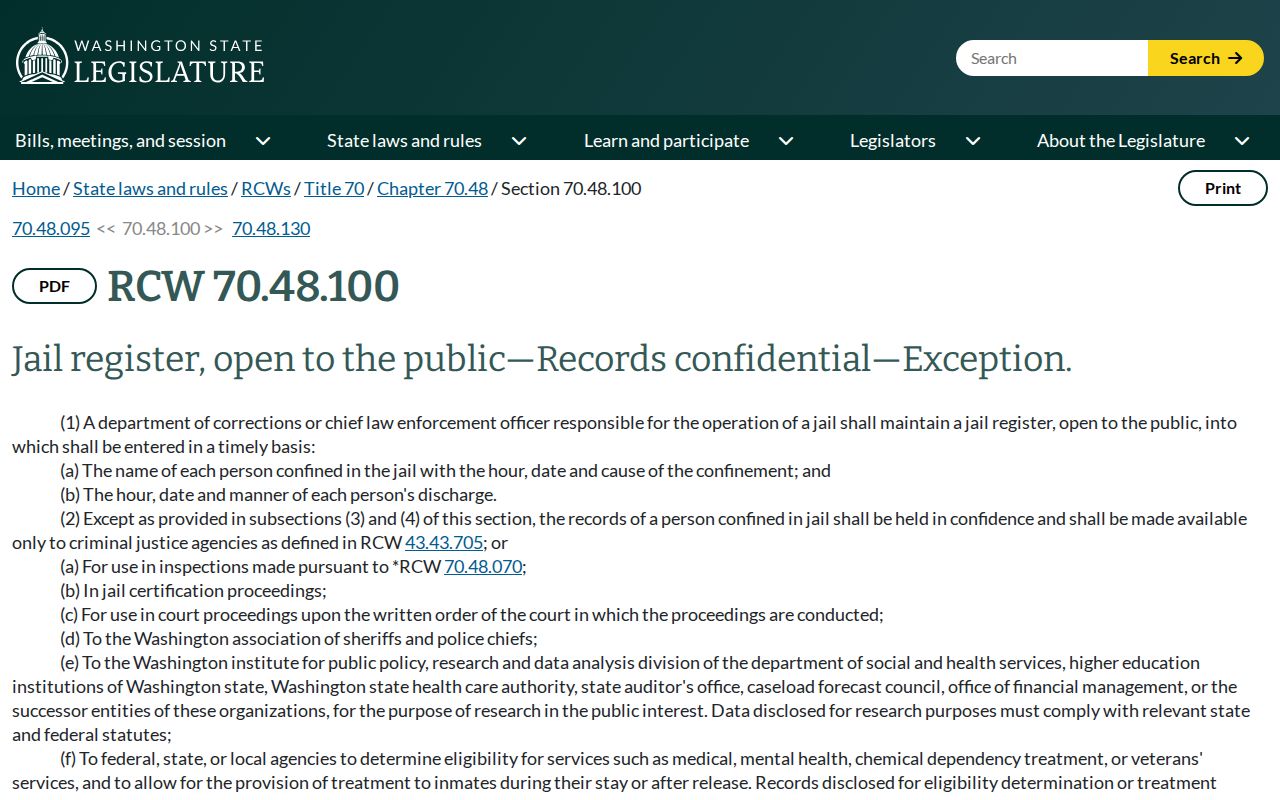
This view of the statute marks the boundary between an open jail register and other records held on a person in custody. Confidential items stay closed.
Court Case Search Is Not an Archive
A portrait can help you spot a record. It cannot tell you how the case ended. For the outcome, pull the court file or docket tied to the arrest. Then confirm with that court. The custody file, the court case, and the archival collection may use different names or case numbers. A missing archive image answers nothing about the disposition.
Next stop: The Washington Courts Odyssey Portal, which searches participating superior courts. It can locate a case. It is not a State Archives collection or a jail-photo database. Not every document in a case file appears there. Sealed cases, juvenile material, and restricted documents do not behave like an open criminal docket. Some items need a separate clerk request. Use the portal's court information to find the office holding the case.
Even a court entry needs verifying. Cite the docket or order that supports the outcome. Keep the historical portrait tied to its collection title and date range. The portal landing page is the case-search starting point and links to court help materials.
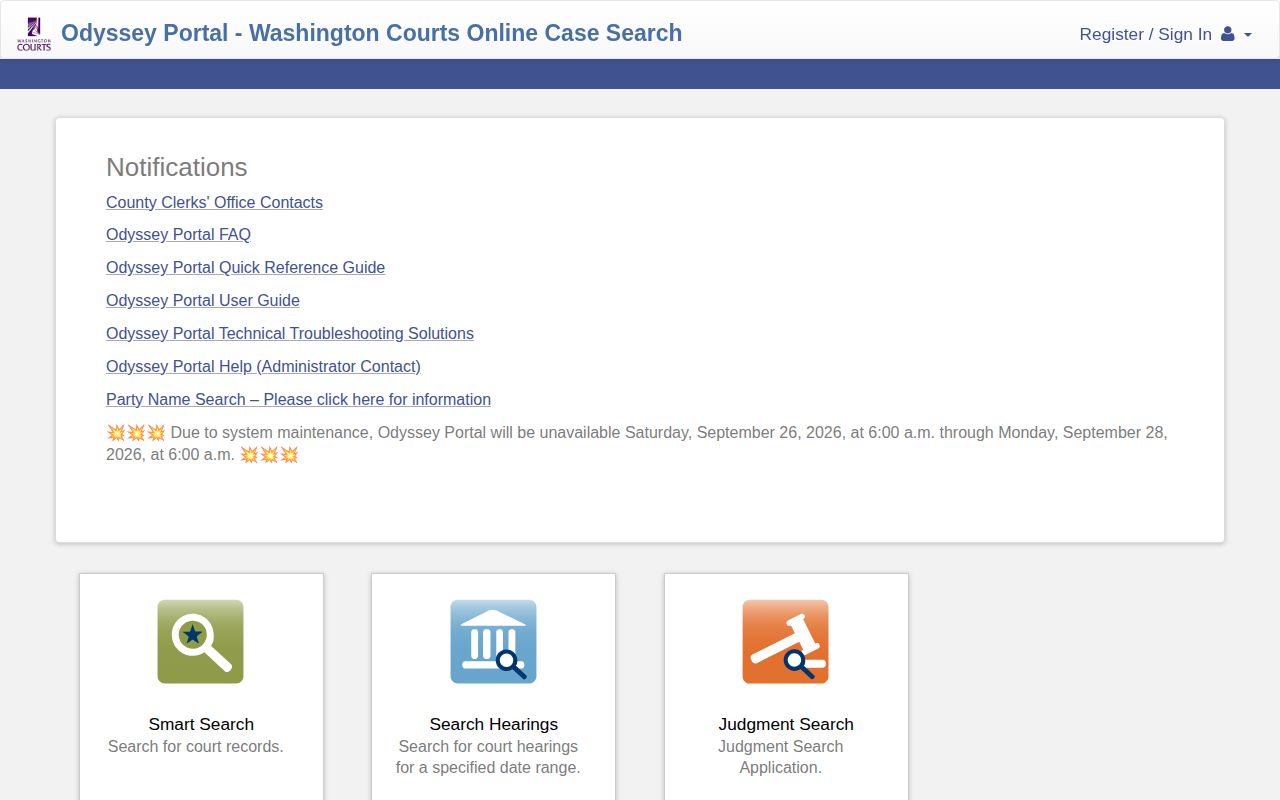
This view of the court-search interface can place a historical record in case context. It does not display a mugshot gallery.